Taula de Continguts
- Cellulite and Skin Laxity Are Not the Same
- What Cellulite Is, Anatomically
- What Skin Laxity Is, Anatomically
- Why a Single Treatment Is Not Enough
- Tools for Cellulite
- Tools for Skin Laxity
- The Combined Protocol, Real Example
- What Results Are Realistic
- What No Body Treatment Replaces
- Frequently Asked Questions
- Book Your Body Assessment at Santé Clinics
Cellulite and Skin Laxity Are Not the Same
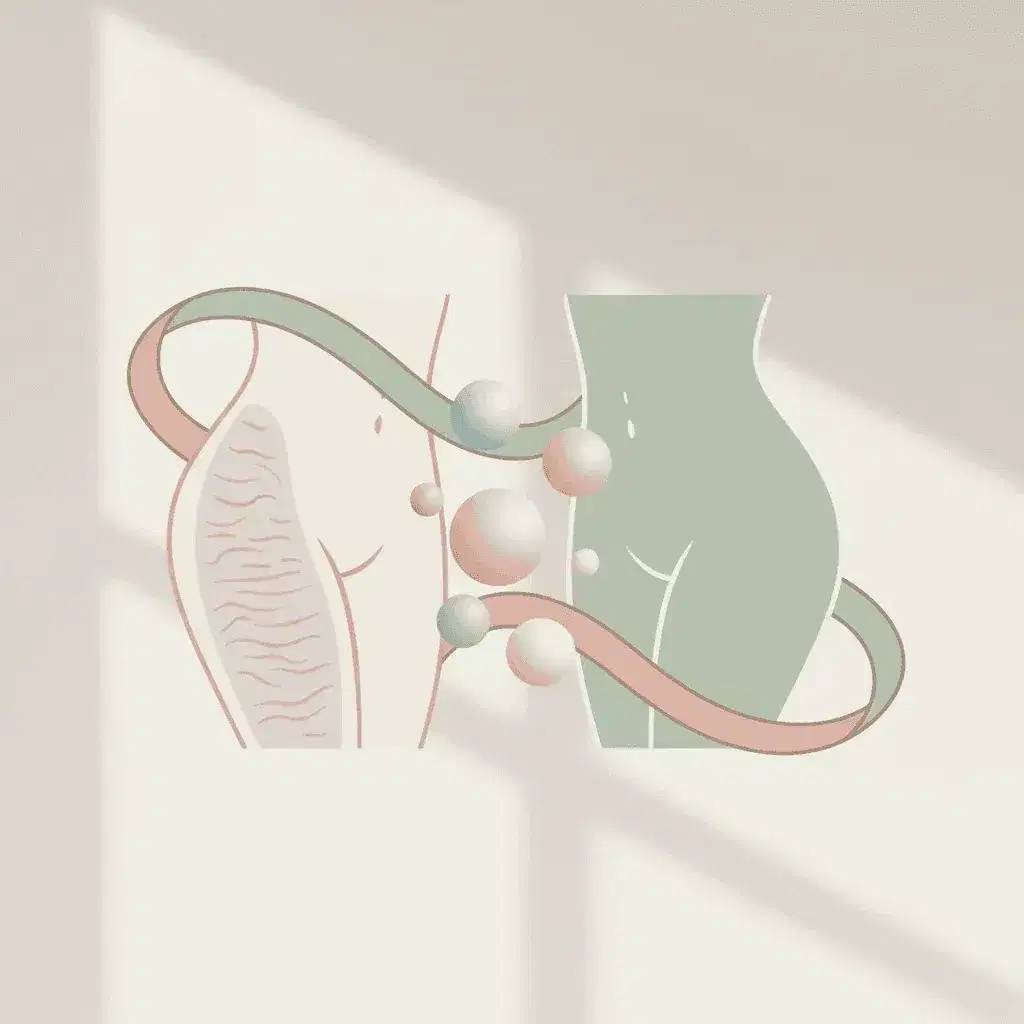
The vast majority of patients who come to Santé's body consultation describe two problems as if they were one: “I have orange peel skin and it feels soft.” These are two distinct problems, with different causes, and treated with different tools. Mixing them into a single generic protocol is the most common reason why a body treatment “didn't work.”
In this article, we explain how we separate the two diagnoses, what technologies and active ingredients we use for each, and why at Santé we always work with combined protocols, not with a single universal treatment.
What Cellulite Is, Anatomically
Cellulite (more correctly, edematous-fibrosclerotic panniculopathy) is an alteration of the subcutaneous tissue where three phenomena converge:
- Adipocyte hypertrophy — adipocytes increase in size and push against fibrous septa.
- Altered microcirculation — compromised lymphatic and venous drainage, fluid retention in the interstitium.
- Fibrosis of the septa — the vertical septa that anchor the skin to the fascia shorten and harden, creating visible depressions.
It is a predominantly female condition because the arrangement of the septa in women is perpendicular to the skin, while in men it is crisscrossed. It has a hormonal (estrogen), genetic, postural, and lifestyle component (sedentary lifestyle, diet rich in salt and sugars, insufficient hydration).
There are different clinical grades:
- Grade 0–1: visible only when pinched.
- Grade 2: visible when standing, not when lying down.
- Grade 3: always visible, with marked depressions and palpable nodules.
What Skin Laxity Is, Anatomically
Skin laxity is loss of skin firmness and connective tissue support. The skin no longer retracts over the underlying tissues. Its causes:
- Decrease in type I and III collagen with age.
- Loss of elastin and disorganization of the extracellular matrix.
- Loss of underlying volume (fat, muscle) after weight loss or sarcopenia.
- Accumulated sun damage and smoking.
Skin laxity can appear in the abdomen after pregnancies, in the arms, inner thighs, and buttocks. It is not “drained”: the skin is stimulated to produce new collagen and to contract.
Why a Single Treatment Is Not Enough
This explains why a patient with advanced cellulite who only undergoes radiofrequency sees little improvement in depressions, and why a patient with post-pregnancy skin laxity who only undergoes pressotherapy feels lighter legs but sees the skin just as loose.
At Santé, we always start with a clinical diagnosis: area, degree of cellulite, presence or absence of skin laxity, biotype, fluid retention, muscle mass, habits. From there, we build the protocol.
Tools for Cellulite
- INDIBA (448 kHz diathermy radiofrequency): mobilizes fluids, improves microcirculation, reduces edema, and works on fibrosis. Ideal for cellulite grades 1–2.
- Body mesotherapy: microinjections of draining and lipolytic cocktails (caffeine, L-carnitine, phosphatidylcholine, plant extracts) directly into the affected subcutaneous tissue.
- Pressotherapy and manual lymphatic drainage: essential complement when there is an edematous component.
- Lipolytic injections (deoxycholic acid, phosphatidylcholine) in localized adherent fat accompanying cellulite.
- Habit modification: hydration, salt reduction, strength exercise, avoiding prolonged standing.
Tools for Skin Laxity
- Body HIFU (focused ultrasound): deep thermal stimulation in SMAS and deep dermis. Immediate contraction + neocollagenesis at 2–3 months.
- Tightening radiofrequency (INDIBA, deep monopolar).
- Injectable collagen stimulators — calcium hydroxylapatite (Radiesse), poly-L-lactic acid (Sculptra) — in buttocks, arms, abdomen, and inner thighs.
- Mesotherapy with firming active ingredients (DMAE, organic silicon, peptides).
- Biostimulation + strength exercise — muscle recovers the underlying volume the skin needs to tighten.
The Combined Protocol, Real Example
A typical 38-year-old patient who consults after a pregnancy, with grade 2 cellulite on the back of the thigh and skin laxity in the abdomen and arms, could receive a protocol like this:
- Initial diagnosis with clinical photography and fold measurement.
- Phase 1 (weeks 1–6): 6 INDIBA sessions on the thigh + weekly draining mesotherapy + pressotherapy.
- Phase 2 (weeks 6–10): Body HIFU on the abdomen and arms + collagen stimulator session in the buttocks to reinforce the upper thigh area.
- Phase 3 (3–6 months): review and selective reinforcement. Monthly maintenance of mesotherapy + INDIBA according to evolution.
- Habits: nutritional plan with Santé's nutritionist, strength exercise 3×/week, hydration, and sleep.
Each protocol is different. The important thing is that the doctor sees the whole picture, not an isolated technique.
What Results Are Realistic
- Cellulite: visible improvement in texture and appearance, but not absolute elimination. Cellulite is a physiological condition; it improves, it is not definitively “cured.”
- Skin laxity: progressive improvement in 2–3 months after collagen stimulation, with optimal results at 6 months. The skin rejuvenates but the patient's basal tone remains their own.
- Maintenance: the regimen never ends. Those who achieve the best results are those who maintain 1–2 quarterly reinforcement sessions and take care of their habits.
What No Body Treatment Replaces
- Strength exercise. Without muscle, the skin has nothing to tighten against.
- Hydration and nutrition. A pro-inflammatory diet sabotages any protocol.
- Sleep and stress management. Chronic cortisol worsens cellulite and skin laxity.
- Time. Results are progressive. Serious protocols last weeks, not days.
Frequently Asked Questions
How many sessions do I need? This is decided by the diagnosis. An average protocol combines between 6 and 12 sessions of device treatments over 2–3 months, with or without injectables.
Is it painful? INDIBA and body HIFU are perfectly tolerable. Mesotherapy is a microinjection sensation that most patients describe as “uncomfortable but bearable.”
Is there downtime? Practically none. Some small bruises after mesotherapy that can be covered normally.
Does it work if I've already tried everything? Often yes, because what failed was the combination, not the tool. A good diagnosis changes the plan.
What if I want to lose weight at the same time? We coordinate this with the nutrition consultation and, if medically indicated, with a supervised GLP-1 protocol. You'll find more about this in other blog articles.
Book Your Body Assessment at Santé Clinics
Before choosing technology, what you need is a diagnosis. At Santé, we start with a complete body assessment at Avenida Diagonal 384, Barcelona: skin analysis, palpation, folds, clinical photos, and a personalized plan.
Write to us on WhatsApp at +34 699 14 58 87 and book your appointment this week.