Taula de Continguts
Rosacea or Sensitive Skin? Keys to Distinguishing Them
Distinguishing between rosacea and sensitive skin is fundamental for a correct approach. Both conditions can present redness and discomfort, but their causes and manifestations differ significantly. Understanding these differences is the first step towards more balanced and healthy skin.
What is sensitive skin?
Sensitive skin is a skin type that overreacts to stimuli that would not normally cause a response in non-sensitive skin. These stimuli can be environmental, such as cold or heat, or chemical, present in cosmetics or cleaning products.
Its symptoms include occasional redness, itching, tightness, and a burning sensation, which are usually transient and disappear when the irritant is removed. It is not a chronic disease, but a characteristic of the skin that requires specific care to maintain its protective barrier.
What is rosacea?
Rosacea is a chronic inflammatory skin disease that primarily affects the face. It is characterized by persistent redness, visible blood vessels (telangiectasias), and, in some cases, papules and pustules similar to acne. It is often located on the cheeks, nose, forehead, and chin.
Rosacea flare-ups can be triggered by factors such as sun exposure, alcohol consumption, spicy foods, stress, or sudden changes in temperature. Unlike sensitive skin, rosacea is a progressive condition that requires diagnosis and medical treatment for its control.
Key differences between rosacea and sensitive skin
Although they share symptoms such as redness, there are important distinctions. Rosacea is a chronic medical condition with specific patterns of redness and may include lesions. Sensitive skin, on the other hand, is a general reactivity to various factors.
The duration and persistence of redness are key indicators. In sensitive skin, redness is temporary and reactive, while in rosacea it is persistent and can worsen over time if left untreated. The presence of telangiectasias or papules is a distinctive sign of rosacea.
| Characteristic | Sensitive Skin | Rosacea |
|---|---|---|
| Type of condition | Skin characteristic | Chronic inflammatory disease |
| Redness | Occasional, transient, reactive | Persistent, with flare-ups, localized |
| Additional symptoms | Itching, tightness, burning | Telangiectasias, papules, pustules |
| Causes/Triggers | External irritants, cosmetics | Sun, alcohol, stress, spicy foods |
| Evolution | Non-progressive, improves by avoiding irritants | Progressive if left untreated |
| Need for medical diagnosis | Not always, but recommended | Essential for proper management |
According to the Spanish Academy of Dermatology and Venereology (AEDV), rosacea affects approximately 10% of the adult population, being more common in fair-skinned women between 30 and 50 years old.
Key points
- Rosacea is a chronic disease; sensitive skin is a characteristic.
- Persistent redness and visible vessels are signs of rosacea.
- Sensitive skin reacts temporarily to irritants.
- A medical diagnosis is crucial for effective rosacea treatment.
- Avoiding triggers is vital in both conditions.
How Santé Clinics approaches it
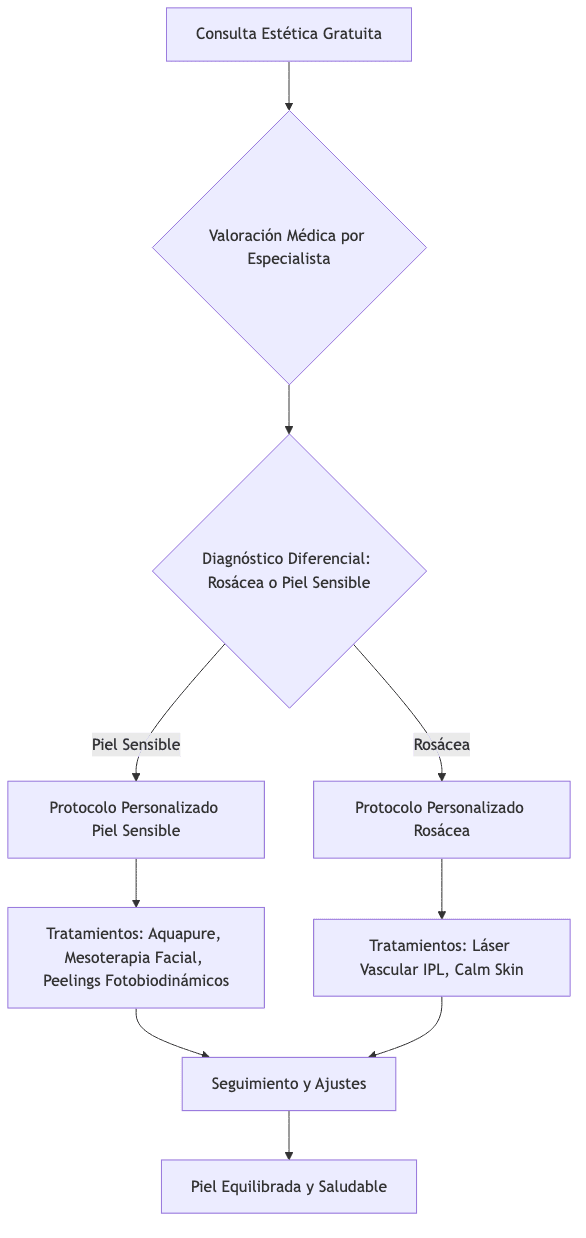
At Santé Clinics, we understand that every skin is unique and requires a personalized approach. Our medical team, led by Dr. Sol Monsalve, performs a comprehensive assessment to correctly diagnose your skin condition. A free aesthetic consultation is the starting point for designing a protocol tailored to you.
For sensitive skin, we focus on restoring the skin barrier and reducing reactivity. This may include treatments such as Aquapure for gentle cleansing, facial mesotherapy with vitamins to nourish and hydrate, or photobiodynamic peels that soothe the skin. We always select products and procedures that respect the delicacy of your skin.
In the case of rosacea, our goal is to control inflammation, reduce redness, and minimize flare-ups. For this, we have advanced medical treatments. IPL (Intense Pulsed Light) vascular laser is a very effective tool for treating persistent redness and visible blood vessels associated with rosacea, with results that vary individually and are evaluated in the weeks following treatment.
Additionally, we can complement the treatment with protocols such as Calm Skin, an in-clinic treatment designed to soothe irritated skin and promote skin barrier recovery. The choice of treatment is always made under medical supervision, ensuring that each step aligns with your skin's specific needs and minimizing any possible adverse reactions. Our team speaks Spanish, English, Portuguese, and Russian for your convenience.
Frequently asked questions
Can I have sensitive skin and rosacea at the same time?
Yes, it is possible. In fact, many people with rosacea have intrinsically sensitive skin, which can complicate diagnosis and treatment. This is why a professional medical assessment is so important to differentiate and address both conditions effectively and safely.
What triggers should I avoid if I have rosacea?
Common triggers include unprotected sun exposure, extreme temperatures, spicy foods, hot beverages, alcohol, emotional stress, and certain cosmetic products. Identifying your personal triggers is key to controlling flare-ups and keeping rosacea under control.
What is the best treatment for rosacea redness?
IPL (Intense Pulsed Light) vascular laser is one of the most effective treatments for reducing persistent redness and visible blood vessels. It acts on the hemoglobin in the capillaries, decreasing their visibility. Results are gradual and several sessions are required, always under the supervision of our board-certified doctors.
Do rosacea treatments have recovery time?
Some treatments, such as IPL laser, may cause mild temporary redness or swelling that usually subsides within a few hours or days. Our specialists will provide you with all necessary post-treatment instructions to ensure optimal recovery and minimize any discomfort.
Is rosacea curable?
Rosacea is a chronic condition that has no definitive cure, but it is controllable. With early diagnosis and an appropriate treatment plan, it is possible to manage symptoms, reduce flare-ups, and significantly improve quality of life. Medical follow-up is essential to maintain long-term results.