
Taula de Continguts
What is Hormone Therapy?
Hormone therapy involves administering hormones to compensate for deficiencies or imbalances in the body. Generally, these hormones are identical to those the body produces naturally. Its objective is to restore physiological functions and alleviate symptoms associated with hormonal imbalances.
This type of treatment is commonly associated with menopause but is also applied in other situations. This includes hormonal deficiencies in men, thyroid disorders, or to support certain fertility treatments. A thorough prior medical evaluation is always required.
Benefits and Risks of Hormone Therapy: A Comparative View
The decision to start hormone therapy should be based on a careful evaluation of its potential benefits versus individual risks. Below, we present a comparative table based on current evidence, especially in the context of menopause, where its use is most frequent.
| Documented Benefits | Risks and Considerations |
|---|---|
| Relief of vasomotor symptoms (hot flashes, night sweats) in menopause. | Slightly increased risk of deep vein thrombosis and stroke. |
| Improved sleep quality and reduced vaginal dryness. | Small increased risk of breast cancer with long-term combined estrogen and progestogen therapy. |
| Prevention of bone loss and reduced risk of osteoporosis. | Possible transient side effects such as nausea, breast tenderness, or mood changes. |
| Improved energy, mood, and cognitive function in some patients. | Risks vary depending on age of initiation, type of hormones, and duration of treatment. |
| Increased muscle mass and bone density in men with testosterone deficiency. | Requires rigorous patient selection and constant medical follow-up to minimize adverse events. |
Evidence in Menopause
For women in menopause, hormone therapy can be very effective. It helps alleviate vasomotor symptoms such as hot flashes and night sweats, contributing to improved sleep quality and reduced vaginal dryness.
In addition to immediate symptoms, hormone therapy in menopause can have long-term protective effects. It has been shown to prevent bone loss and reduce the risk of osteoporosis. A meta-analysis of randomized controlled trials, including data from the WHI (Women's Health Initiative) study, has confirmed the efficacy of hormone therapy in bone mineral density, with a reduction in the risk of vertebral and hip fractures in postmenopausal women.
Other Documented Benefits
In other contexts, hormone therapy can improve energy and mood. It can also contribute to better cognitive function in some patients. In men, testosterone replacement therapy can increase muscle mass and bone density.
Risks and Considerations of Hormone Therapy
Like any medical intervention, hormone therapy is not without risks. The key lies in rigorous patient selection and constant medical follow-up. This minimizes potential adverse effects.
Risks in Menopause
For hormone therapy in menopause, risks may include a slight increase in the risk of deep vein thrombosis and stroke. There is also a small increased risk of breast cancer with prolonged use of combined estrogen and progestogen therapy. The WHI study, a large clinical trial, has provided much information on this, indicating a relative risk of 1.24 for invasive breast cancer with combined estrogen and progestin therapy after 5.2 years of follow-up.
It is important to note that these risks vary depending on the age of treatment initiation, the type of hormones used, and the duration of therapy. A board-certified doctor will evaluate your complete clinical history. This includes family and personal history to determine your risk profile.
General Considerations
Other possible side effects may include nausea, breast tenderness, or mood changes. These are usually transient and can be mitigated by adjusting the dose. Medical supervision is crucial to manage these aspects.
“Current data suggest that, for women with moderate to severe menopausal symptoms, the benefits of hormone therapy outweigh the risks when initiated within 10 years of menopause or before age 60.” — The North American Menopause Society, 2017
Medical Assessment and Personalization
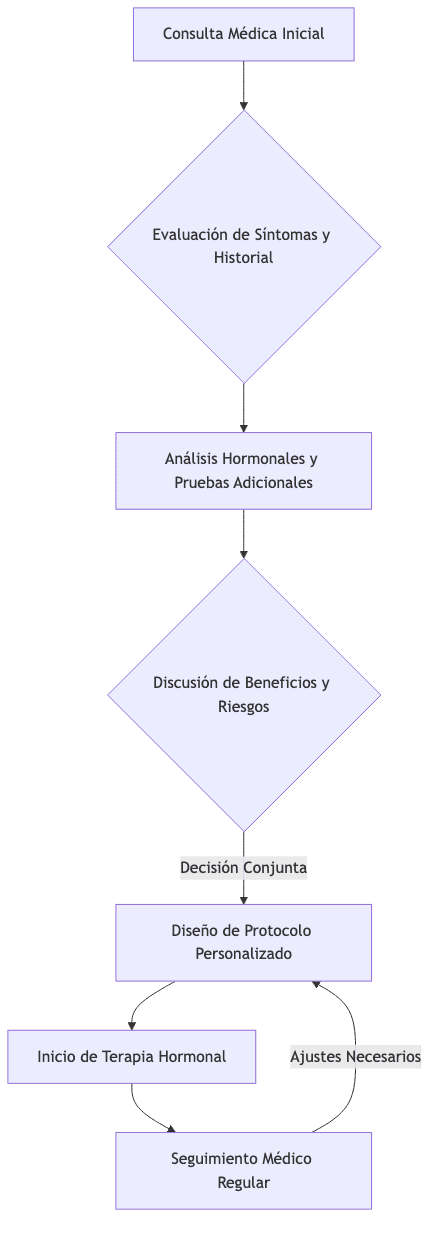
The decision to initiate hormone therapy should always be the result of a detailed medical consultation. The doctor will assess your general health, symptoms, and goals. Blood tests will be performed to measure hormone levels.
Treatment personalization is fundamental. There is no one-size-fits-all hormone therapy. The type of hormone, dosage, and route of administration (oral, transdermal, etc.) will be adapted to your specific needs. Individual results can vary significantly.
Key points
- Hormone therapy balances hormones and alleviates specific symptoms.
- It is effective for menopausal symptoms and other hormonal deficiencies.
- It can reduce the risk of osteoporosis in postmenopausal women.
- Risks include a minimal increase in thrombosis and breast cancer in certain cases.
- The decision must always be individualized and under strict medical supervision.
How Santé Clinics approaches it
At Santé Clínica Estética, we understand the importance of a comprehensive and medically supervised approach to well-being. We offer a specialized medical consultation for menopause, which includes exhaustive blood tests, a complete evaluation, and rigorous follow-up.
Our board-certified medical team addresses the aesthetic and well-being aspects related to menopause. This allows us to offer a personalized plan that may include hormone therapy, provided it is medically appropriate and safe for you.
We believe in prevention and healthy aging, supporting our patients with treatments based on scientific evidence. Our board-certified medical team is here to educate you, answer your questions, and design a protocol that suits your needs, always prioritizing your health and safety. We offer free aesthetic consultations, and our multilingual team will assist you in Spanish, English, Portuguese, or Russian.
Frequently asked questions
Is hormone therapy suitable for all women in menopause?
No, hormone therapy is not suitable for all women. The decision depends on individual factors such as age, time since menopause, presence of severe symptoms, and personal and family medical history. A medical assessment is indispensable to determine suitability.
How long can hormone therapy be taken?
The duration of hormone therapy is an individualized medical decision. Generally, it is recommended to use the lowest effective dose for the shortest possible time to relieve symptoms. However, in some cases, treatment can be extended under continuous medical supervision, periodically re-evaluating the benefits and risks.
Is hormone therapy only used in menopause?
Although it is well known for its use in menopause, hormone therapy has other applications. It is used to treat hormonal deficiencies in men (such as low testosterone), thyroid disorders, or in some cases of hormonal imbalances affecting fertility. Always under specialized medical indication and supervision.
What type of medical follow-up is needed during hormone therapy?
During hormone therapy, regular medical follow-up is required. This includes periodic visits to evaluate treatment efficacy, monitor possible side effects, and perform blood tests to adjust doses if necessary. Exams such as mammograms and ultrasounds may also be recommended, according to the individual protocol.
Are there alternatives to hormone therapy for menopausal symptoms?
Yes, there are alternatives to manage menopausal symptoms. These may include lifestyle changes, such as diet and exercise, as well as non-hormonal therapies and supplements. Your doctor can discuss these options with you if hormone therapy is not suitable or preferred in your case.