Taula de Continguts
Seasonal hair loss: normal or concerning?
Hair loss is a common concern, especially during the autumn months. It is a physiological phenomenon known as seasonal telogen effluvium. During this period, a greater number of hair follicles enter the resting phase and subsequently shed.
This process is part of the natural hair renewal cycle. However, differentiating between normal loss and loss that requires medical intervention is fundamental. At Santé Clínica Estética, our medical team is trained to make this distinction.
What is seasonal hair loss?
The hair cycle consists of three main phases: anagen (growth), catagen (transition), and telogen (rest and shedding). Normally, about 10-15% of our hair is in the telogen phase. In autumn, this proportion can temporarily increase.
It is an evolutionary adaptation to changes in light and temperature. Noticing more hairs on your brush or in the shower during this time is, in many cases, completely natural. This shedding is usually self-limiting, and the hair recovers within a few months.
When should I be concerned and seek medical help?
While moderate shedding is normal, there are warning signs that indicate the need for a hair consultation. Persistent shedding beyond two or three months is one of them. So is visibly reduced hair density.
The appearance of bald spots or generalized hair thinning are important indicators. If hair loss is accompanied by itching, inflammation, or scaling of the scalp, medical evaluation is essential. These symptoms may suggest underlying conditions such as dermatitis or infections.
According to the Spanish Academy of Dermatology and Venereology (AEDV), a healthy person loses between 50 and 100 hairs per day. During periods of telogen effluvium, this figure can temporarily double or triple without implying a pathology.
Factors that can aggravate hair loss
In addition to seasonality, various factors can influence hair health. Chronic stress is a known trigger for telogen effluvium. Nutritional deficiencies, such as lack of iron, zinc, or B vitamins, can also negatively impact hair.
Certain medical conditions, such as thyroid problems or hormonal imbalances, can manifest with hair loss. Sudden weight changes, postpartum, or menopause are other relevant factors. Our medical team conducts a comprehensive evaluation to identify these causes.
Key points
- Seasonal hair loss in autumn is a normal physiological process, known as telogen effluvium.
- Losing up to 100-150 hairs per day can be considered normal during these times.
- If hair loss persists for more than 2-3 months or is accompanied by visible thinning, it's time to consult.
- Factors such as stress, nutritional deficiencies, or hormonal imbalances can aggravate hair loss.
- A professional medical evaluation allows for an accurate diagnosis and an appropriate treatment plan.
How does Santé Clínica Estética address it?
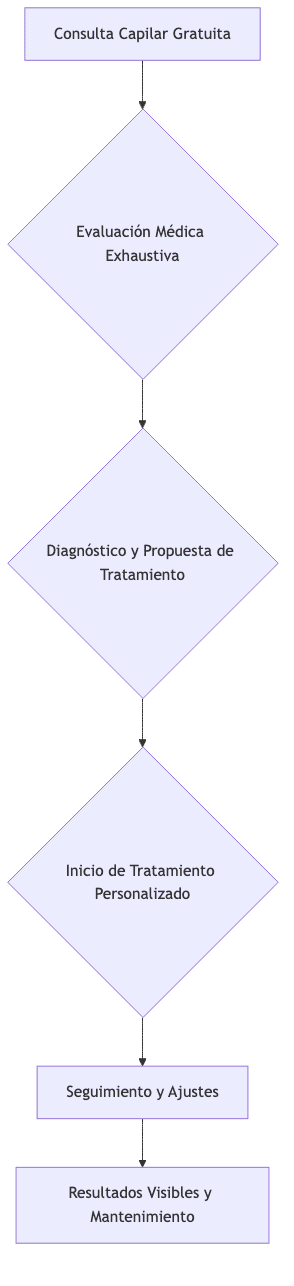
At Santé Clínica Estética, we understand the concern that hair loss generates. Our approach is always medical and personalized. The first step is a free and comprehensive hair consultation with one of our doctors.
During this consultation, the doctor will take a detailed medical history and perform a scalp examination. If necessary, blood tests will be requested to rule out deficiencies or hormonal alterations. Our team speaks Spanish, English, Portuguese, and Russian to facilitate communication.
Once the diagnosis is established, a treatment protocol adapted to your needs is designed. We prioritize the naturalness and long-term health of the hair. Our treatments are performed by board-certified doctors.
Our hair treatments
We offer various options to address hair loss and improve hair density. Hair mesotherapy consists of microinjections of vitamins, minerals, and amino acids directly into the scalp. This technique nourishes the follicle and stimulates growth.
Hair PRP (Platelet-Rich Plasma) uses growth factors from your own blood to revitalize follicles. Hair exosomes are another advanced option that promotes cellular regeneration. These treatments aim to strengthen existing hair and encourage new hair growth.
For specific cases, we can also combine these therapies. The choice of treatment is always made under medical supervision. Our goal is to restore hair health and improve hair quality long-term.
| Hair Treatment | Description | Price (EUR) |
|---|---|---|
| Hair Mesotherapy | Microinjections of nutrients to stimulate growth. | 130 € |
| Hair PRP | Plasma rich in growth factors for follicular revitalization. | 250 € |
| Hair Exosomes | Advanced cellular regeneration to strengthen hair. | 250 € |
Frequently asked questions
How long does it take to see improvement with hair treatments?
The results of hair treatments are not immediate and require patience. Generally, improvements in hair density and quality begin to be observed after 2-3 months of starting treatment. The hair growth cycle is slow, and it is necessary to wait for the follicles to respond and new hair to grow.
Are mesotherapy or hair PRP treatments painful?
Mesotherapy and hair PRP treatments are performed with very fine needles, which minimizes discomfort. Before the procedure, a topical anesthetic cream can be applied to ensure patient comfort. Most patients describe the sensation as mildly uncomfortable, but tolerable.
Do I need special preparation before a hair consultation?
For the hair consultation, it is advisable to come with clean hair and no styling products. This allows the doctor a better visualization of the scalp and follicles. If you have used any recent hair treatments or have analysis results, it is helpful to bring them.
Do hair treatments have side effects?
Hair treatments such as mesotherapy and PRP are generally safe and well-tolerated. Side effects are usually mild and transient, such as redness, slight swelling, or small bruises at the injection sites. These disappear within a few hours or days. You will always be informed in detail about possible effects before any procedure.
Can I combine hair treatments with my daily routine?
Yes, most hair treatments are easily integrated into your daily routine. After the sessions, normal activities can be resumed without significant downtime. It may be recommended to avoid washing your hair or direct sun exposure for the first 24 hours. The doctor will provide specific post-treatment instructions.