Table of Contents
Melasma and laser: why caution is needed?
Melasma is a chronic skin condition characterized by dark, symmetrical patches, usually on the face. Unlike other hyperpigmentations, its origin is multifactorial, involving genetic, hormonal (pregnancy, contraceptives), sun exposure, and certain medications. This complexity makes its treatment particularly challenging and prone to recurrence.
Melanin, the pigment that gives skin its color, is overproduced in specific areas, creating a distinctive pattern. It is crucial to understand that it is not simply a sunspot; it is a deeper alteration in the regulation of pigment in the skin.
The use of laser to treat melasma requires extreme caution and expertise because, if not applied correctly, it can lead to post-inflammatory hyperpigmentation (PIH), worsening the condition. Certain types of lasers, especially ablative ones or those with incorrect parameters, can stimulate melanin production, resulting in a rebound effect. Therefore, selecting the appropriate laser type and settings for each skin phototype and melasma type is crucial. At Santé Clínica Estética, our board-certified doctors meticulously evaluate each case to determine the feasibility and the safest protocol, always prioritizing safety and effectiveness.
Laser for melasma: a solution or a risk?
Laser can be an effective tool for treating melasma, but its use requires extreme caution and expertise. Certain types of lasers, especially ablative ones or those with incorrect parameters, can cause post-inflammatory hyperpigmentation (PIH), worsening melasma.
The key lies in selecting the appropriate laser type and settings for each skin phototype and melasma type. At Santé Clínica Estética, our board-certified doctors meticulously evaluate each case to determine the feasibility and the safest protocol.
Types of laser and their application in melasma
Not all lasers are suitable for melasma. Lasers that generate a lot of heat or are too aggressive can stimulate melanin production, resulting in a rebound effect. Therefore, medical supervision is essential.
In our clinic, we use technologies such as the Q-Switched Laser for melasma, which works by fragmenting pigment without damaging surrounding tissue. We also consider IPL (Intense Pulsed Light) in certain cases, always with very controlled parameters and after a detailed evaluation.
| Laser/Light Type | Mechanism of Action | Risk in Melasma | Indication in Melasma (Santé) |
|---|---|---|---|
| Q-Switched Laser | Ultrashort pulses that fragment pigment. | Low (with appropriate parameters). | Primary treatment, safe and effective. |
| IPL (Intense Pulsed Light) | Broad-spectrum light that treats pigment and vessels. | Medium (requires filters and low fluence). | Selected cases, with a vascular component. |
| Fractional Ablative Laser (CO2, Erbium) | Creates micro-columns of controlled damage in the skin. | High (significant risk of PIH). | Generally contraindicated. |
| Diode/Alexandrite Laser (hair removal) | Absorbed by melanin in the hair follicle. | High (can worsen existing melasma). | Not indicated for melasma treatment. |
Why is a medical consultation indispensable?
Before any laser treatment for melasma, a thorough medical consultation is mandatory. Our doctors evaluate the type of melasma (epidermal, dermal, or mixed), the patient's skin phototype, and their clinical history. This allows us to design a safe and effective protocol, minimizing risks.
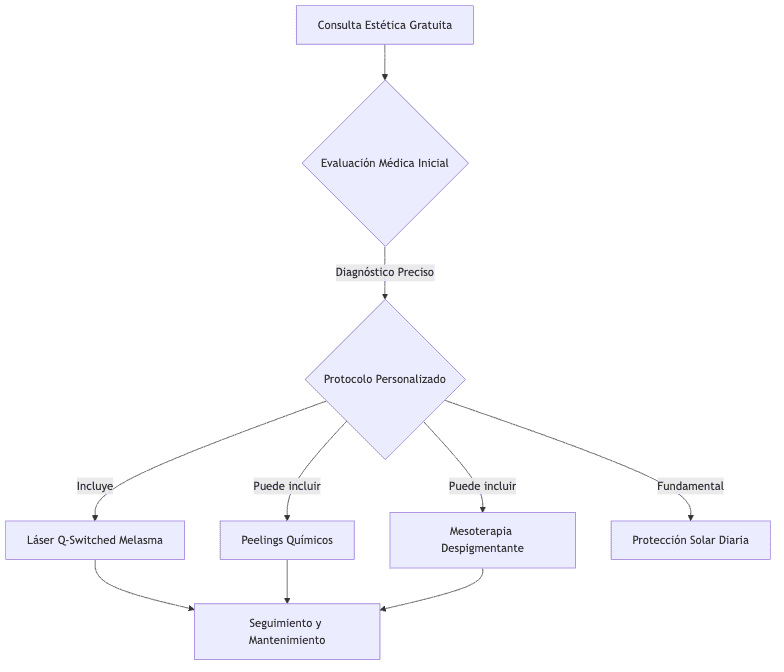
Melasma treatment often requires a combined approach that may include topical depigmenting agents, chemical peels, and rigorous sun protection. Laser is one part of this comprehensive plan, not a standalone solution.
«Clinical experience indicates that adherence to an adequate maintenance protocol and constant sun protection are crucial to minimize melasma relapses.»
How Santé Clínica Estética addresses it
At Santé Clínica Estética, safety and natural results are our priority. Our board-certified medical team, experienced in managing complex hyperpigmentations, performs a detailed medical assessment before any procedure. This includes an accurate diagnosis of melasma and the exclusion of other conditions.
We design a personalized protocol for each patient, which may include Q-Switched Laser sessions, medical peels, mesotherapy with depigmenting agents, and recommendations for home care. Sun protection is a fundamental pillar of all our melasma treatments. We offer a free aesthetic consultation to evaluate your case and discuss the best options. Our team speaks Spanish, English, Portuguese, and Russian for your convenience.
Key points
- Melasma is a complex hyperpigmentation with multiple triggering factors.
- Laser can be effective, but requires a very precise diagnosis and technology selection.
- Q-Switched Laser is a safe and effective option for melasma in expert hands.
- Ablative lasers or those with high heat emission are generally contraindicated due to the risk of a rebound effect.
- A detailed medical consultation is essential to design a comprehensive and safe treatment plan.
- Rigorous sun protection is fundamental before, during, and after treatment.
Frequently asked questions
Can I sunbathe if I am treating melasma with laser?
Direct sun exposure is not recommended during melasma treatment, especially with laser. Daily and strict sun protection is crucial to prevent the worsening of spots and the rebound effect. Always use broad-spectrum sunscreen with SPF 50+ and reapply every two hours.
How many laser sessions do I need to see results for melasma?
The number of sessions varies significantly depending on the depth and extent of the melasma, as well as the individual response of each patient. Generally, several sessions are required, spaced 2 to 4 weeks apart. Our doctors will provide an estimate during the initial consultation.
Is laser treatment for melasma painful?
Q-Switched Laser treatment for melasma is generally well tolerated. Patients usually describe a sensation of warmth or small “pricks.” At Santé Clínica Estética, we can apply a topical anesthetic cream to ensure your comfort during the procedure.
Can I completely eliminate melasma with laser?
The main goal of melasma treatment is to lighten and control it. Due to its chronic and multifactorial nature, complete and permanent elimination is difficult to guarantee. However, with an appropriate medical protocol and consistent maintenance, very significant and lasting improvements in skin appearance can be achieved.